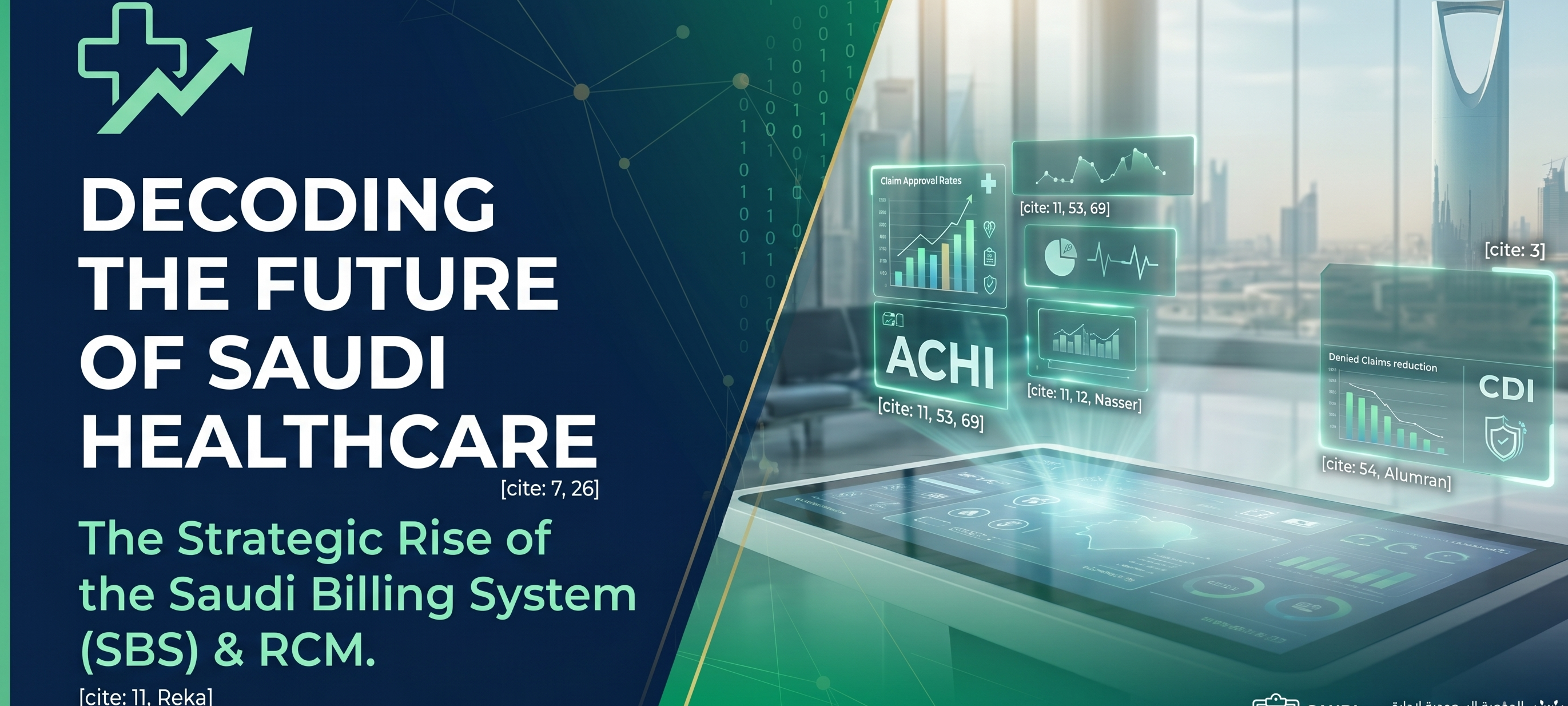


For years, Saudi Arabia relied on the Australian Modification of the International Classification of Diseases, 10th Revision (ICD-10-AM) and Australian Refined Diagnosis-Related Groups (AR-DRGs) for public health reporting (ALRashidi, 2023; Reka, n.d.). However, as the Health Sector Transformation Program aggressively moves the public system toward privatization and value-based care, localized standardization became essential (Alumran, 2026; Hariri, 2026). To unify a private health insurance sector that previously used fragmented, non-standardized billing practices, the Council of Health Insurance (CHI) established the Saudi Billing System (SBS) (Reka, n.d.). The SBS expanded baseline Australian classifications by 30%, injecting nearly 1,800 new, specialized codes tailored specifically to the regional medical landscape and local fee structures (Reka, n.d.).
-
Shifting to Global Standards: The Saudi Billing System
-
Why Accurate Coding Matters More Than Ever
-
The Next Frontier: Automation and Artificial Intelligence
The ongoing privatization of public hospitals means institutions must directly interact with commercial insurance providers (Alumran, 2026). Within this competitive framework, medical coding acts as the absolute linchpin for two major areas: Revenue Cycle Management (RCM): Hospital financial sustainability depends entirely on accurate data submission. Recent data underscores that a lack of structured Clinical Documentation Improvement (CDI) programs skyrockets the odds of insurance claim denials, with documentation and information errors accounting for nearly half of all rejected claims (Alumran, 2026). Public Health & Analytics: Beyond billing, clean coded data directly shapes epidemiologic research, tracks the chronic disease burden (such as type 1 diabetes), and informs nationwide health policymaking (Alshareef, 2025; Almutairi, 2026).

"The shift towards a value-based healthcare model requires a robust health information infrastructure, where clinical documentation and medical coding serve as the critical bridge between healthcare quality and financial sustainability."
— Alumran (2026)
Because human error and rigorous documentation demands are leading to increased administrative time burdens for local clinicians, Saudi Arabia is actively turning to technology (Al-Yasin, 2026). The current frontier features the integration of Artificial Intelligence (AI) and Machine Learning (ML) into medical coding workflows (Nasser, 2025). AI platforms utilizing Natural Language Processing (NLP) are beginning to auto-code medical charts directly from Electronic Health Records (EHRs) (Nasser, 2025). This tandem approach aims to minimize systemic human billing errors, accelerate claim turnaround times, and free up practitioners to prioritize bedside care (Al-Yasin, 2026; Nasser, 2025). As the Kingdom continues to invest heavily in specialized local talent and AI integration, medical coding will remain the invisible thread connecting clinical excellence with fiscal health (Almutairi, 2026).